
I Do Not Need These Roundtables to End in Agreement
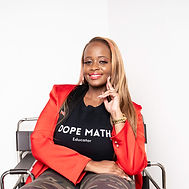

It is easy to want a public conversation to feel complete. You want the strongest ideas to land, the audience to understand where the discussion is going, and everyone to walk away feeling like the conversation arrived somewhere. When I think about the State of Mathematics Education Roundtables, I understand that instinct, and I also have to remind myself that it can get in the way of the kind of dialogue I actually want us to have.
This conversation does not need to end neatly.
The Conversations That Changed Me Were Messy in the Middle
Looking back, the conversations that changed me most rarely felt settled while I was in them. Someone said something I did not agree with, or asked a question that exposed an assumption I had not examined. I left with a thought I could not resolve on the drive home, and then that thought followed me into another meeting, another classroom, another decision.
That is still movement.
Some Questions Resist Clean Answers
In education, we are often rewarded for clarity. We build plans, identify outcomes, write objectives, establish measures, and determine next steps, and there is value in all of that. Some questions in our profession, though, cannot be handled responsibly if we rush toward a conclusion because uncertainty makes us uncomfortable. Mathematics education is full of those questions.
We are still working out what belongs in the curriculum, what students should be required to learn, and what rigor actually looks like across different communities and contexts. Then there is the question of how to honor research while paying attention to what educators and students are telling us in real time, whether artificial intelligence should change what we teach at all, and which traditions in mathematics education are worth protecting and which ones we have kept simply because they are familiar. I do not want a Roundtable that pretends those questions have easy answers.
In these Roundtables, I want the researcher to bring research and the classroom educator to bring the reality of students sitting in front of them tomorrow morning. The district leader can name the implementation challenge, the professor can speak to preparation, and the curriculum writer can push on coherence. The conversation becomes more honest because all of those perspectives are present at the same time. There will be moments when one perspective complicates another. Good.
When you hear something and think, I am not sure I agree with that, stay there for a minute. Agreement can be useful, and it is only one sign that a conversation mattered. You might leave finally understanding why someone else sees the issue differently, or able to name the part of your own thinking that needs more examination. Sometimes you simply leave with a better question than the one you brought in.
That is what I hope happens whenever someone enters one of these conversations.
How I Hope You Watch
When you watch a State of Mathematics Education Roundtable, I hope you resist the urge to decide too quickly who is right. Listen for the experiences underneath the positions, and notice which comments make you lean in and which ones make you uncomfortable. Pay attention to the question you are still thinking about after the video ends, because that question may be the most important part.
Stay Connected to the Conversation
The State of Mathematics Education Initiative is bigger than a single Roundtable or a single conversation. My goal is to keep creating space for educators, leaders, and others who care deeply about mathematics education to listen, question, reflect, and contribute to what comes next.
If you are not already connected to the DOPE MATH® ecosystem, I invite you to join the waitlist. That is the best way to stay informed about upcoming Roundtables, new conversations, learning opportunities, and other ways to be part of this work.
You can also watch the Roundtable conversations on the DOPE MATH® YouTube Channel.
I hope you will continue listening, questioning, and adding your voice to the conversation.
Until next time,
Continue Being DOPE,
Jaliyla Fraser
Creator of DOPE MATH®


Comments